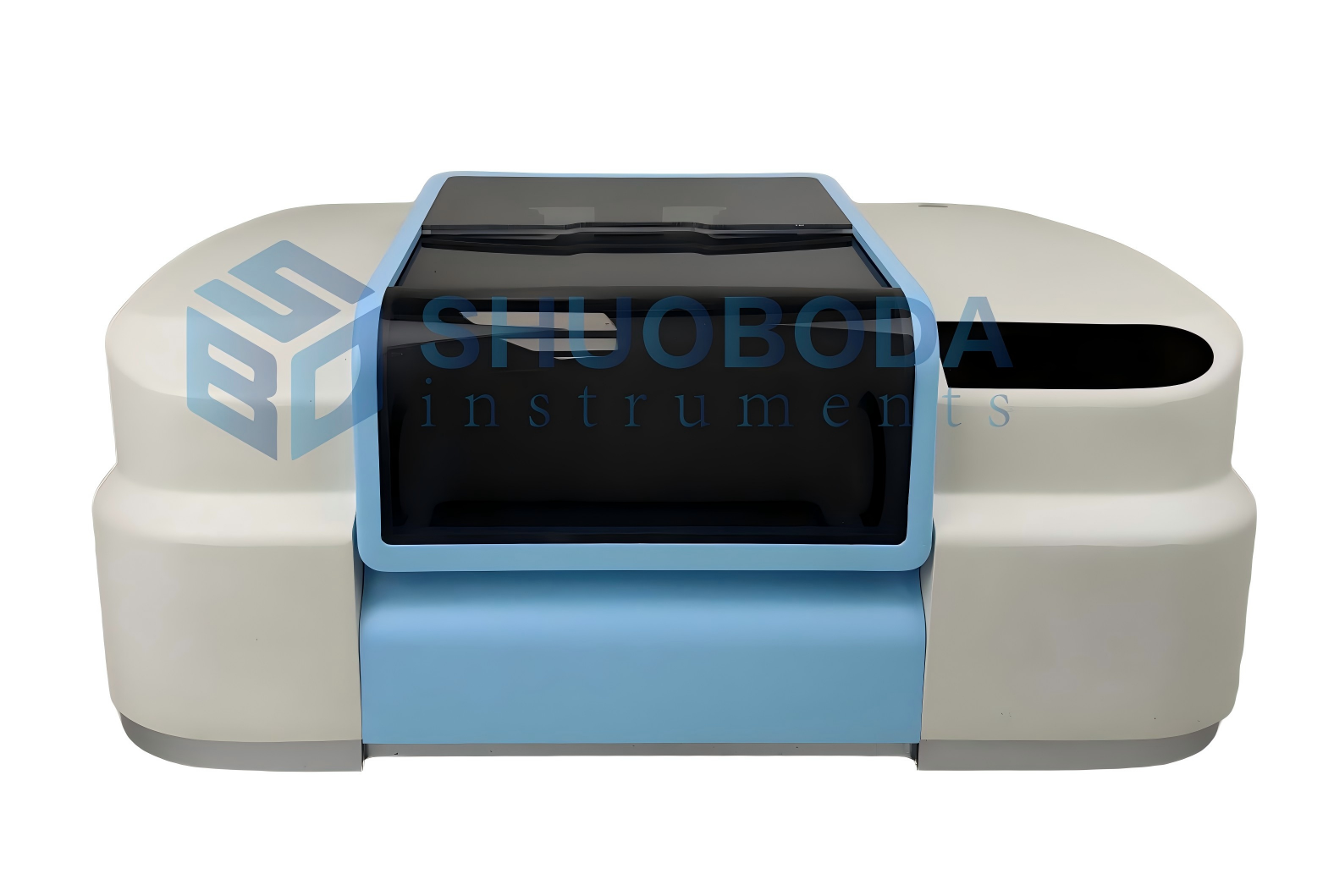
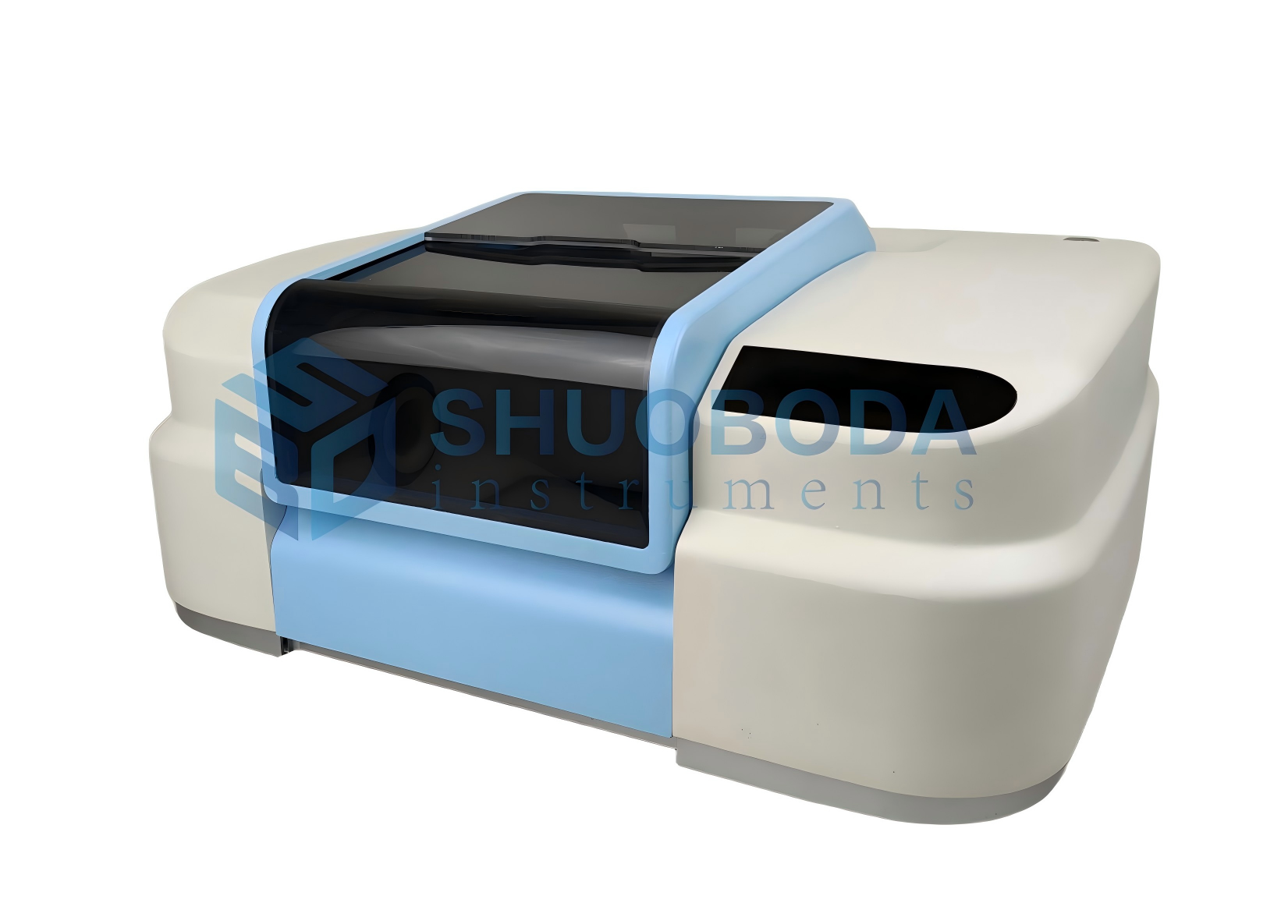
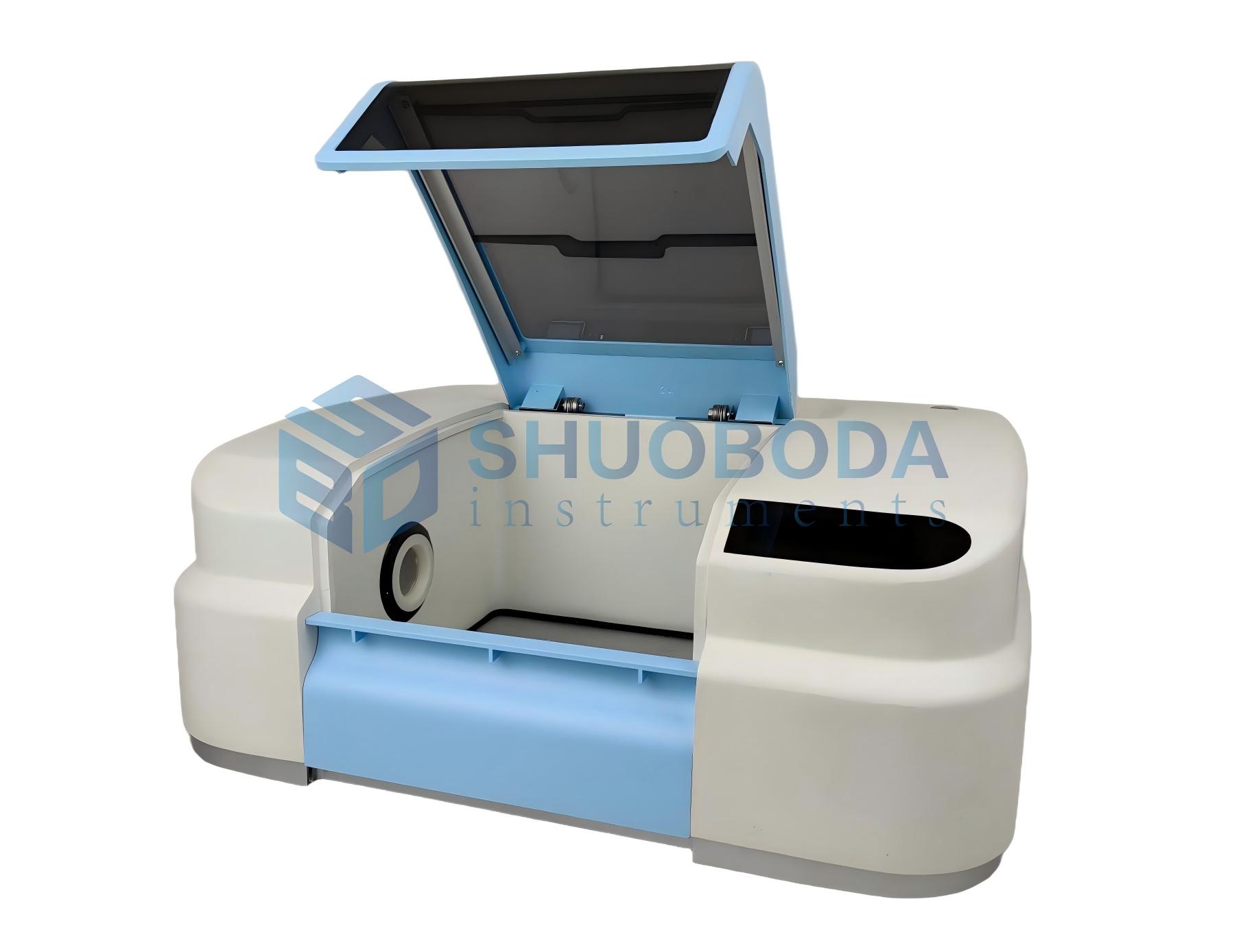
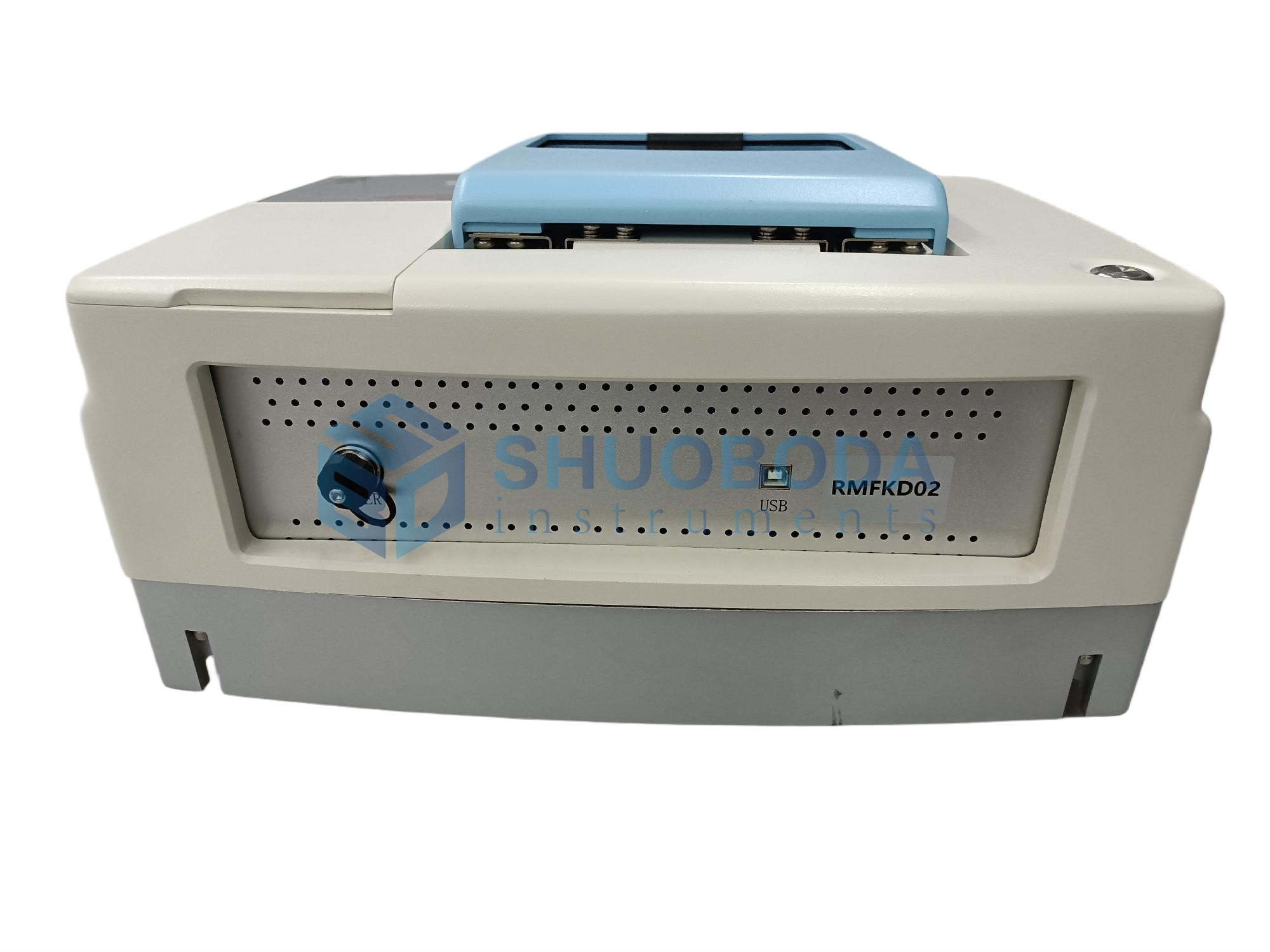
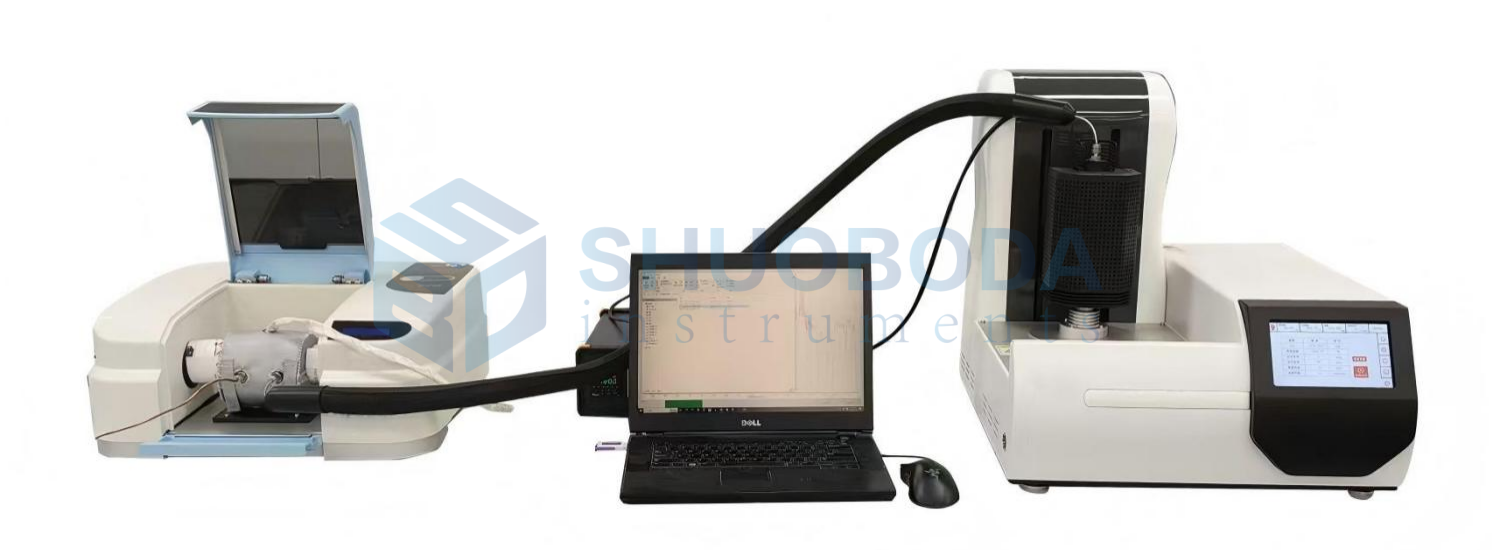
The FTIR-100 Fourier Transform Infrared Spectrometer is an advanced instrument developed by our company, integrating the latest mechanical, electronic, and AI technologies. Innovative engineering gives the instrument advanced light source energy transmission efficiency, interferometer stability, and receiver sensitivity, meeting the demands of teaching, industrial, and research applications.
Instrument Principle
The instrument operates on the principle of interferometer frequency modulation. Light emitted by the source is converted into interference light by the Michelson interferometer and then directed onto the sample. The receiver captures the interference light carrying sample information, and the computer software derives the sample spectrum through Fourier transformation.
Instrument Features
The interferometer uses a DSP-controlled, electromagnetically driven non-orthogonal Michelson interferometer with continuous dynamic adjustment, automatically optimizing system energy without manual adjustment.
Dynamic collimation technology: a magnetic suspension interferometer in which both the moving mirror and the fixed mirror are plane mirrors, with continuous dynamic collimation at 130,000 times per second.
SuperTech digital electronic system: fully digital with digital signal output, 24-bit, 500 KHz A/D conversion, and a high-speed USB interface for real-time acquisition of spectral data, ensuring data authenticity and reliability.
High-energy infrared single-point light source with electronic voltage stabilization and a built-in uniquely designed reflector, greatly improving light source energy utilization.
Excellent optical system design: the optical reflector adopts an overall SPDT cutting process to ensure high reflection efficiency and optical system consistency.
Built-in industrial-grade temperature and humidity display screen with digital readout and a humidity alarm device. The instrument is fully sealed to keep the entire cavity dry, greatly extending the service life of each component.
Solid-state temperature-controlled diode laser.
Reusable 304 stainless steel box desiccant, replaceable without opening the cover.
Core components such as the beam splitter, detector, and window are made of KBr material with a special anti-fogging coating; moisture-proof materials such as KRS-5 and ZnSe are also available.
Powerful expansion capability: connectable to transmission accessories, attenuated total reflection (ATR) accessories, diffuse reflection accessories, plane reflection accessories, external reflection accessories, infrared microscopes, and more.
Intelligent human-computer interaction design with operation guidance, an intuitive and concise interface, and easy learning.
Real-time display of data acquisition, with continuous display of the acquisition process and a spectral preview mode.
The operating software includes baseline correction, data conversion, multi-component quantification, curve peak fitting, H2O/CO2 automatic compensation, absorbance/transmittance conversion, KK conversion, peak marking, four arithmetic operations, Y-axis normalization, QC comparison, basic analysis, and other functions. It supports more than a dozen formats including CSV, SPA, DPT, and TXT, and allows arbitrary switching between wavenumber (cm⁻¹) and wavelength (µm).
Main Advantages
Technical Parameters
Model
FTIR-100
Spectral range
7800–350 cm⁻¹
Resolution
0.5 cm⁻¹
Signal-to-noise ratio
55000:1 (P-P value, 4 cm⁻¹, 1 min scan)
Wavenumber accuracy
Better than 0.01 cm⁻¹
Beam splitter
KBr substrate plated with germanium (imported)
Interferometer
Non-orthogonal Michelson interferometer
Receiver
High-sensitivity DLATGS receiver with moisture-proof film (imported)
Data transmission
High-speed USB 2.0 (compatible with USB 3.0)
Power supply
100 V–240 V, 50/60 Hz wide-band power supply
Compatible operating systems
Windows XP, Windows Vista, Windows 7, 8, 10, 11
Instrument dimensions
520 mm × 430 mm × 250 mm
Weight
19 kg
Applied Industries
Jewelry identification
Crystal Q value determination
Textile fiber identification
Architectural glass parameter determination
Fatty acid methyl ester content determination
Asphalt traceability and SBS content determination
Measurement of carbon and oxygen content in silicon crystals
Testing of food, medicine, and their packaging materials
Determination of mineral insulating oil and lubricating oil structural cluster composition
Identification and determination of typical unconventional additives in motor gasoline
Identification of polymer materials such as plastics, rubber, nylon, and resin
Qualitative Analysis
Qualitative analysis is commonly used for the overall identification of substances. For samples that can be anticipated in advance, identification can be confirmed by comparing the sample infrared spectrum with the standard infrared spectrum. For samples that cannot be anticipated, identification can be performed by searching the infrared spectrum library. Our company can provide approximately 220,000 Sadtler spectra.
Identification of textile fibers
Pharmaceutical GMP certification testing
Testing of food and drug packaging materials
Application scheme for testing brake shoe materials
Screening of organic tin in electronic and electrical products
Trace evidence analysis and inspection of paint evidence
Testing of high molecular polymer materials such as plastics, rubber, adhesives, asphalt, and resins
Quantitative Analysis
Quantitative analysis is based on Lambert-Beer quantification. A relationship curve between content and infrared characteristic peak absorbance or peak area is established, and then the unknown content sample is tested.
Benzene content in gasoline
Determination of hemispherical emissivity of building glass
Determination of SBS content in modified asphalt
Determination of free silica content in dust
Determination of fatty acid methyl ester (FAME) content
Determination of ethylene content and isotacticity in polypropylene
Identification and determination of typical unconventional additives in motor gasoline
Determination of vinyl acetate content in ethylene-vinyl acetate copolymer (E-VAC)
Other Typical Infrared Application Solutions
Determination of nitrile rubber content
Determination of interstitial oxygen content in silicon crystals
Determination of substitutional carbon atom content in silicon
Determination of total recoverable petroleum hydrocarbons in solid waste
Determination of water quality, petroleum, and animal and vegetable oils
Rapid determination of benzene content in gasoline by mid-infrared spectroscopy absorption method
Determination of carbon structure and structural cluster composition of mineral insulating oil and lubricating oil
Determination of hydroxyl content in quartz
Determination of methylal content in motor gasoline
Application in adhesive curing rate testing
Determination of alcohol ester hydroxyl value and saponification value content in cold rolling oil
Determination of T501 antioxidant content in transformer oil and turbine oil
Get in Touch With Us
Experienced service team and strong production support team provide client worry-free order service.